07860 635025
 Teal@TNAplumbingandheating.co.uk

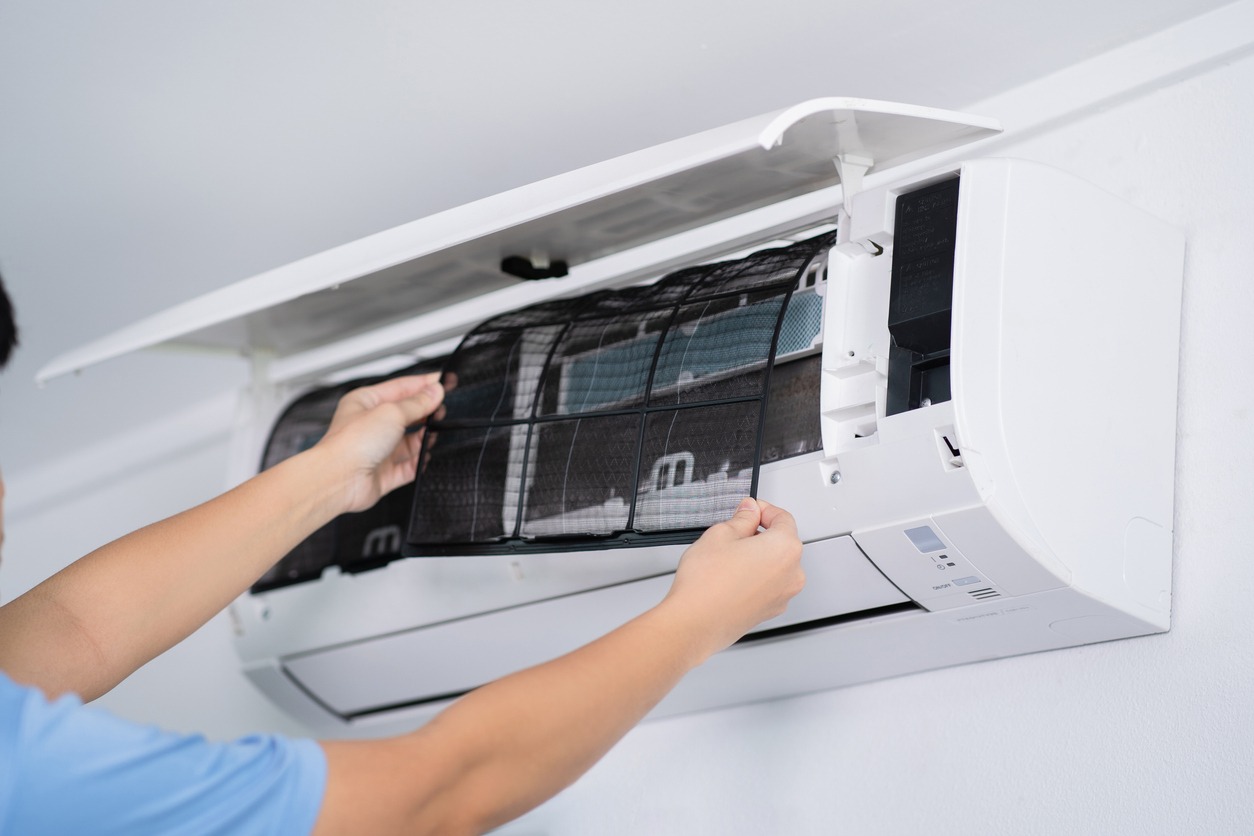
How Do Air Conditioning Units Work?
Air conditioning units are a common fixture for managing indoor comfort during warmer periods. But how do air conditioning units work?
The mechanism takes heat and humidity from the inside of a space to the outside. This process is accomplished by manipulating a refrigerant through a continuous cycle of compression, expansion, and thermal transfer, which mirrors the way a household refrigerator operates.
The Refrigerant Cycle: The Core Mechanism
The central function of an air conditioning unit relies on the refrigerant cycle. A specialised chemical, the refrigerant, is continuously circulated through the unit’s components, transitioning between liquid and gas states. The process begins inside the indoor unit at the evaporator coil. Here, the cold, low-pressure refrigerant absorbs heat from the air blown across the coil, causing the refrigerant to vaporise into a low-pressure gas. This warm gas then travels to the outdoor unit’s compressor.
Compression and Heat Rejection
The compressor, located in the outdoor unit, functions to increase the pressure of the refrigerant gas. This compression significantly raises the refrigerant’s temperature and pressure. The resulting high-pressure, hot gas moves into the condenser coil, also situated outside. Because the refrigerant is now considerably warmer than the ambient outdoor air, it readily rejects its heat to the atmosphere. As the heat is dissipated, the refrigerant cools down and undergoes a phase change back into a high-pressure liquid.
Expansion and Cooling the Indoor Air
The high-pressure liquid refrigerant then returns to the indoor unit, passing through the expansion valve. This valve rapidly reduces the pressure of the refrigerant, which causes it to flash into a very cold, low-pressure mixture of liquid and gas. This cold mixture flows into the evaporator coil. As the home’s fan blows warm, humid indoor air over this cold coil, the refrigerant absorbs the thermal energy. This action simultaneously cools and dehumidifies the air, which is then circulated back into the room, maintaining a consistent and controlled indoor climate.
Contact us to discuss your air conditioning needs!