07860 635025
 Teal@TNAplumbingandheating.co.uk

Hybrid Heating Controls: Boilers and Heat Pumps Working Together
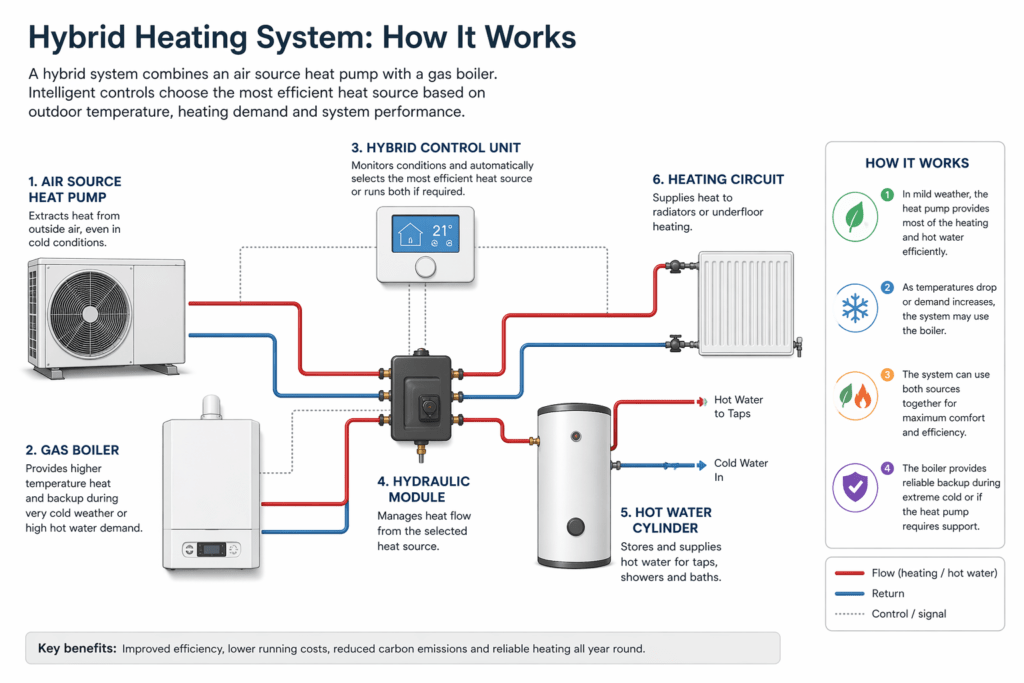
A hybrid heating system pairs an air source heat pump with a gas boiler, using a shared control system to decide which one runs at any given time. The controls are what make the whole thing work – without them, you’d just have two separate appliances.
When is each one used
In practice, the heat pump does most of the work through milder weather. It draws heat from the outside air and transfers it into your central heating system at a lower flow temperature, which suits steady background warmth well. Because it moves heat rather than generating it through combustion, it typically uses less energy per unit of output under those conditions.
As temperatures fall, the picture changes. When outdoor temperatures drop significantly to the point where the heat pump can no longer operate efficiently, the control system automatically switches operation to bring in the second heat source – either switching completely from the heat pump to the boiler, or running both together.
Energy Costs
The controls can also factor in energy costs. Some systems automate switching based on electricity prices, fossil fuel supply costs, time of day, and whether solar panels are generating energy – so the boiler only fires when it’s genuinely cheaper to run.
It’s worth knowing that in most setups, the heat pump and boiler are paired via a buffer tank, meaning both heat sources won’t run simultaneously – when one fires up, the other switches off.
Consult a professional
If you’re considering this route, correct system design and professional installation matter. Both appliances need to be properly sized and configured to work together efficiently. If you’d like to discuss whether a hybrid setup suits your home in Doncaster, get in touch with TNA Plumbing and Heating Ltd.